

What's UniSysCat all about?

UniSysCat stands for Unifying Systems in Catalysis. We are a Cluster of Excellence - more than 300 researchers from four universities and four research institutes in the Berlin and Potsdam area - working jointly together on current challenges in the highly relevant field of catalysis.

UniSysCat unites biologists, chemists, engineers and physicists with the aim to revolutionize catalysis research.

News
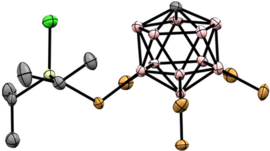
A UniSysCat team presents new, extremely reactive silicon cations for potential applications in recycling and green chemistry, including the chemical decomposition of so-called „forever chemicals“.

From Berlin to Melbourne and back: A doctoral student from the UniSysCat research group of Prof. Limberg visited cooperation partners at Monash University in Australia and brought back exciting research results.

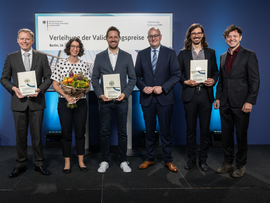
Great success for catalysis innovations from TU Berlin: The Nano Cats GmbH wins one of the 2025 Validation Awards in the VIP+ program of the BMFTR. With nanotechnology, they develop coatings for electrodes that save energy.

On July 2, the Vice Presidents of the German Research Foundation (DFG) have been elected. UniSysCat member Prof. Dr. Peter Seeberger, director at the MPICI and the CTC, has been re-elected for his second term in office.

Every year, the Gerhard Ertl Lecture Award honors an outstanding scientist in the field of electrocatalysis. This year, Prof. Dr. Héctor D. Abruña receives the prestigious award named after UniSysCat's spiritus rector.

The EC²/BIG-NSE doctoral program, which is closely linked to UniSysCat, held its annual retreat on 12 and 13 June 2025. PhD students and supervisors shared their research progress and discussed the future of the program.

Six episodes of the German podcast "exzellent erlärt" have been published since February. Listen in as a warm-up for an episode by UniSysCat coming very soon!

On June 28, the Long Night of Science took place in Berlin. UniSysCat contributed to the "Exzcellent Pub Quiz" by Berlin's 7 Clusters of Excellence at TU Berlin. It was a great evening!

An international team including several UniSysCat researchers is using the powerful method of serial-femtosecond crystallography to visualize precisely how a bacterial light receptor reacts to illumination.

On May 22, the German Research Foundation announced the funding decisions for the Clusters of Excellence. UniSysCat will not be funded beyond 2025. Yet, Berlin's catalysis research remains.

Video: About UniSysCat

Energie-Zeitenwende: Video with Youtuber Tom Bötticher

Consortium
Unifying Systems in Catalysis (UniSysCat) is funded by the Deutsche Forschungsgemeinschaft (DFG, German Research Foundation) under Germany´s Excellence Strategy – EXC 2008– 390540038