

What's UniSysCat all about?

UniSysCat stands for Unifying Systems in Catalysis. We are a Cluster of Excellence - more than 300 researchers from four universities and four research institutes in the Berlin and Potsdam area - working jointly together on current challenges in the highly relevant field of catalysis.

UniSysCat unites biologists, chemists, engineers and physicists with the aim to revolutionize catalysis research.

News
Using sophisticated operando spectroscopy a team around UniSysCat group leader Beatriz Roldán Cuenya from the FHI Berlin gains insights into the function of a nickel-based catalyst of great potential for the reduction of CO2.

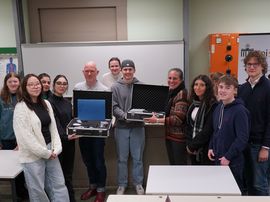
UniSysCat and TU Berlin’s Institute for Chemistry present experiment kit to Hans-Litten-Schule

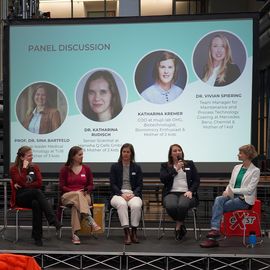
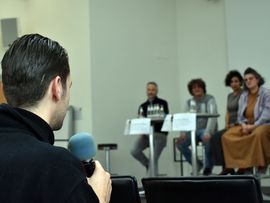
How can a career in experimental science coexist with the demands of starting and raising a family? This question took center stage at the "Career & Family" event, co-organized by greenCHEM and UniSysCat.

Dr. Bonnie Murphy from the Max Planck Institute of Biophysics was honored for her groundbreaking research in catalysis. Join us in celebrating her achievements at the award ceremony on April 11, 2025, at TU Berlin.

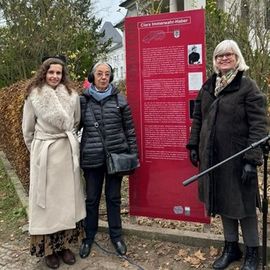
A stele was erected in Steglitz-Zehlendorf to commemorate Clara Immerwahr, the first woman in Germany to receive a doctorate in physical chemistry. In Immerwahr's honor, UniSysCat annually awards young female scientists.

A team of four scientists, including UniSysCat group leader Peter Saalfrank from the University of Potsdam, was awarded an ERC Synergy Grant for their project IRASTRO, that is dedicated to interstellar astrochemical research.

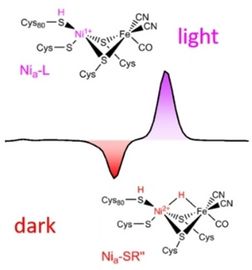
The UniSysCat groups of spectroscopists Horch and Zebger discover a potential shortcut for catalytic hydrogen cleavage in a hydrogenase that is controlled by light - opening up new possibilities for manipulating this process.

The EC²/BIG-NSE doctoral program celebrated its 17th Jubilee and Alumni Meeting on October 28-29, 2024, welcoming around 40 alumni for insightful panel discussions.

We congratulate UniSysCat group leader Roldán Cuenya from FHI Berlin, on winning the “ACES – Margarita Salas” Award in Physics, Mathematics and Engineering, that honors her research on catalytic nanostructured materials.

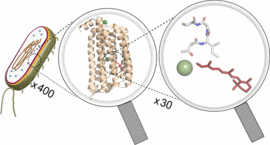
A UniSysCat team has shown that it is possible to study proteins, such as a chloride pump, in living cells using time-resolved IR and UV/Vis spectroscopy.

Events

There are currently no UniSysCat events scheduled. We look forward to you visiting this page again soon.

Video: About UniSysCat

Energie-Zeitenwende: Video with Youtuber Tom Bötticher

Consortium
Unifying Systems in Catalysis (UniSysCat) is funded by the Deutsche Forschungsgemeinschaft (DFG, German Research Foundation) under Germany´s Excellence Strategy – EXC 2008– 390540038